Guides / Materials
Cobalt Chrome (ASTM F1537) Machining for Implant Parts: What Changes at the Machine
October 12, 2026
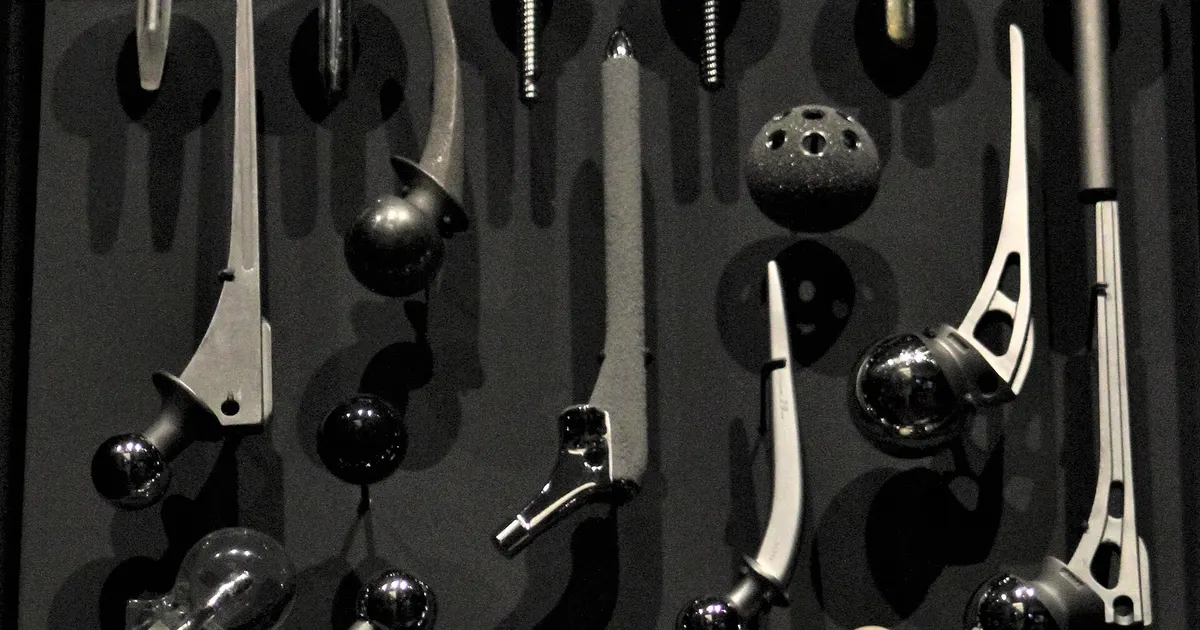
Cobalt chrome is the material of choice for many bearing surfaces and high-wear implant parts, and it is also one of the harder metals to cut. A shop that quotes it as it would quote 316L is either very experienced or not planning for tool life. This guide explains what changes at the machine, what the standard covers and what to check before you accept a quote.
What the standard covers
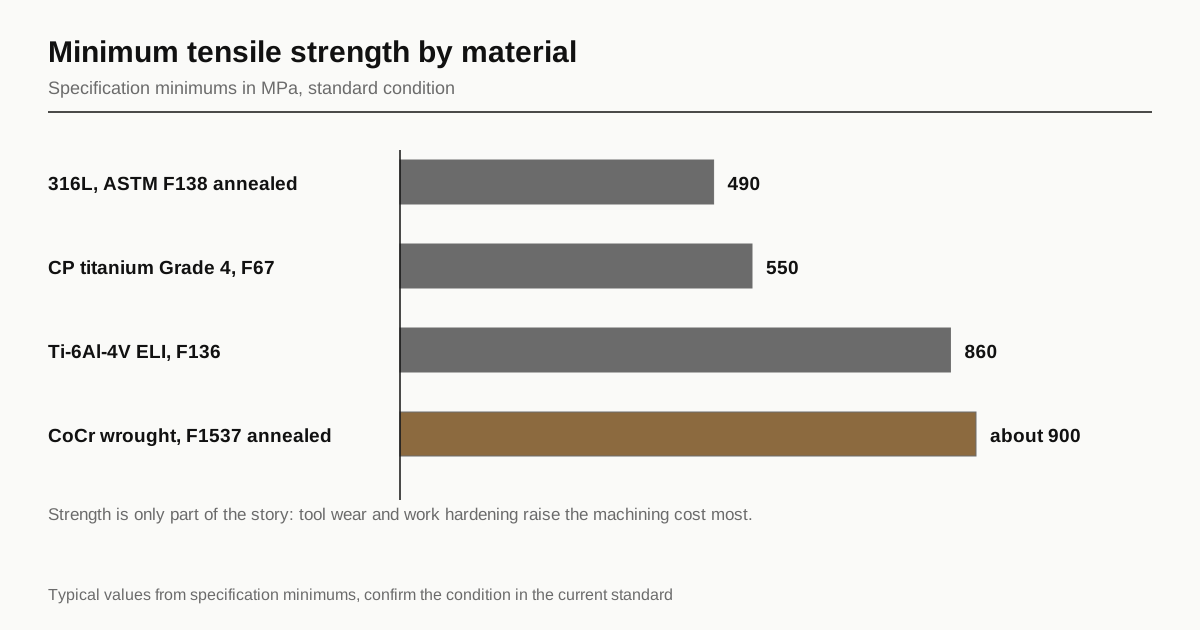
ASTM F1537 covers wrought cobalt chromium molybdenum alloys for surgical implants. Wrought means the material has been worked, by rolling or forging, into bar or other stock before machining. The standard defines chemistry, mechanical properties for each alloy designation and the conditions the material can be supplied in.
ASTM F75 covers the cast version of a similar chemistry. Cast parts are made near net shape and finished by grinding and polishing. Machined parts start from wrought bar, so F1537 is the standard that appears on those drawings. Other cobalt based alloys are covered by different standards, for example ASTM F562 for a nickel bearing multiphase alloy and ASTM F90 for a tungsten bearing one. If your drawing says only “cobalt chrome” or “CoCr”, you have not yet named a purchase.
Why it is hard to cut
Four properties combine.
- Work hardening. The surface hardens under the cut. A tool that rubs instead of cutting makes the next pass harder.
- Abrasiveness. Hard carbides in the structure wear the cutting edge.
- Low thermal conductivity. Heat stays at the cutting edge instead of leaving with the chip.
- High cutting forces. The machine, the fixture and the tool all need to be rigid.
The result is lower cutting speeds than stainless steel, a more conservative feed and tool life that is short compared with 316L. Shops that run cobalt chrome weekly have a tool library, a change interval and a coolant plan. Shops that run it rarely often quote high, or quote low and absorb the cost on the first lot.
| Property | CP titanium | Ti-6Al-4V ELI | 316L stainless | Cobalt chrome F1537 |
|---|---|---|---|---|
| Density, g per cm3, typical | 4.5 | 4.4 | 8.0 | 8.3 |
| Work hardening | Moderate | Moderate | High | High |
| Tool wear | Moderate | Moderate to high | Moderate | High |
| Heat at the edge | High | High | Moderate | High |
| Relative tooling cost | Base | Base to higher | Lower | Higher |
Treat every entry as typical and general. Alloy, condition and tooling change the real figures.
What a good process plan looks like
A shop that knows cobalt chrome tends to describe a plan like this.
- Rigid setup. Short tool stick-out, a stiff machine and a fixture that supports the part.
- Sharp carbide, positive geometry. Fresh edges, because a worn edge work-hardens the surface.
- Steady feed. Never let the tool dwell in the cut, and avoid stopping mid-pass.
- High-pressure coolant. Delivered at the cutting edge to remove heat and clear chips.
- Planned tool changes. Tools swapped by count, not by waiting for a failure.
- Finish allowance. Stock left for grinding or polishing where the surface is a bearing surface.
Ask which of these the shop actually does. The answer shows whether it has run the material before.
Bearing surfaces and finishing
Many cobalt chrome parts exist because they bear against another surface, so the finish is part of the function. Femoral heads and similar parts are ground and polished to a surface roughness specified in very small fractions of a micrometre, and the roundness and size tolerances on them are tight. Machining leaves stock for those operations, and the machining shop and the finishing shop need to agree on how much. A finishing shop that receives parts with inconsistent stock cannot hold a polished geometry.
Surface condition afterwards matters for corrosion resistance and wear. Our guide to passivation and electropolish covers surface treatments, and cleaning validation for machined implants covers the residue side.
Bar certificates and traceability
An implant part lives or dies on its material evidence. Check four things on the bar certificate.
- The standard. ASTM F1537 and the alloy designation, not “cobalt chrome” alone.
- The condition. Annealed, hot worked or cold worked, because the condition sets strength and hardness.
- The heat lot. A number that ties the bar to a melt and its test results.
- The test results. Chemistry and mechanical properties as reported by the mill, within the limits of the standard.
The shop has to keep that heat lot linked to every part through every operation, including outside processes. If a sub-tier vendor handles the parts, the heat lot link has to cross that boundary too. Read how to read an ISO 13485 certificate for how the scope line limits what a certificate covers.
Supply and lead time
Cobalt chrome bar is a smaller market than titanium or stainless. Bar sizes can be limited, minimum order quantities can be large and lead times can run longer. A quote that is silent on bar availability may hide a delay. Ask the shop where the bar comes from, in what size and when it will arrive, and whether it stocks your size.
Where the money goes
A cobalt chrome quote has four cost blocks, and it helps to ask a shop to show them separately.
Bar. The raw material, including the cutting allowance and the offcut that cannot be used. Because the bar is costly, the scrap allowance matters more than on stainless. A shop that scraps one part in twenty on a first lot is spending real money.
Machine time. Longer than on stainless for the same geometry, because speeds and feeds are conservative.
Tooling. Inserts, drills and taps wear faster. On small parts the tooling cost per piece can exceed the bar cost.
Finishing and inspection. Grinding, polishing and the check of a tight geometry on a hard material. These steps are often outside the machining shop, so lead time and handling risk both go up.
The cost guide lays out the same blocks for the wider quote. If two quotes for the same cobalt chrome part differ by a large margin, the gap is nearly always in tooling assumptions and scrap allowance, and the cheaper shop is not always the one that has priced them correctly.
Nickel, sensitivity and the regulatory file
Cobalt chrome alloys can contain trace nickel, and patients with metal sensitivity are a recognised concern for any metallic implant. The chemistry limits in ASTM F1537 are part of the evidence in a device file, and the choice between alloys belongs with the regulatory and clinical team. A machining shop has no say in it and should not be asked to advise. What a shop can do is keep the material chain clean, so the evidence in the file describes the part that was actually made.
Mistakes that raise the price
- Writing “CoCr” on the drawing. The shop has to guess the standard, the alloy and the condition, so it quotes the worst case.
- Copying a tolerance from a titanium part. A tolerance that is routine on titanium can be tight on a hard, work-hardening alloy.
- Leaving out the stock for finishing. The finishing shop then reworks the geometry, and tolerances shift.
- Choosing the cheapest quote without reading the tooling line. A low price that assumes stainless-like tool life will not survive the first lot.
What to ask a shop
- Have you run wrought cobalt chrome to ASTM F1537 on parts like mine, and in what volume?
- What is your tool change plan and how is it priced?
- What stock do you leave for grinding and polishing?
- Where does the bar come from and how long is the lead time?
- How do you keep the heat lot linked through every outside process?
For how those costs compare with other alloys, our guide to titanium, 316L and PEEK covers the rest of the material set, and what drives machined component cost covers the wider quote.
We match buyers with machining suppliers and the buyer pays us nothing. We do not machine parts and we do not qualify a supplier for you, because that stays in your own quality system. To send a drawing, request a quote and we reply within 24 business hours.
See also: the ASTM F1537 reference page for the alloys, supply conditions and certificate content of the specification itself.
See also: cast, forged and wrought cobalt-chromium compared, covering F75, F799, F1537 and the L605 alloy in F90.
Sources
- ASTM F1537, wrought cobalt-28chromium-6molybdenum alloys for surgical implants
- ASTM F75, cobalt-28chromium-6molybdenum alloy castings and casting alloy for surgical implants
Standards and regulations change. Check the current text at the source before you rely on it in a submission.
Frequently asked questions
Why does cobalt chrome cost more to machine than stainless steel?
It work-hardens, it is abrasive and it holds heat at the cutting edge, so tools wear faster and cut conditions are more conservative. Machine time is longer and tool cost per part is higher. The bar also tends to cost more per kilogram. The premium comes from tooling and bar, not from a different kind of machine.
What is the difference between ASTM F75 and ASTM F1537?
F75 covers cast cobalt chrome molybdenum, used where a part is cast to near shape and then finished. F1537 covers wrought alloys, supplied as bar or forging stock and machined to shape. The chemistry is similar, the processing history is different, and a drawing should name the one it means.
Can I swap titanium for cobalt chrome on a design to cut cost?
Not as a cost move. A material change is a design change that touches strength, wear, imaging and biocompatibility evidence in your file. Ask your regulatory team before asking a shop to quote an alternative.
Need a quote for this part?
Send the drawing. We match you with up to 3 medical machining suppliers and reply within 24 business hours.
Get matched with a medical machining supplier