Guides / Quality and Compliance
Device History Record Inputs From a Machining Supplier: A Checklist for Each Lot
October 29, 2026
A device history record is yours. A machining supplier does not write it, but several of its entries come from the supplier’s own records and arrive with the shipment. This guide lists the inputs a shop should send with each lot, maps them to what a device history record has to show and flags the gaps that cause trouble in an audit.
The DHR after the QMSR
The Quality Management System Regulation took effect on 2 February 2026. FDA’s commentary on the final rule is direct about the record types. The terms device master record, design history file and device history record do not appear in ISO 13485, and FDA chose not to keep separate requirements for them. Its reasoning is that the elements of those records are largely required by ISO 13485 anyway. For the old DHR, it points to the medical device or batch record described in clause 7.5.1. For the old master record it points to the medical device file in clause 4.2.3.
So you may not find “DHR” in the current 21 CFR Part 820. Most device companies still use the name for the lot-level record, and so does this guide. What matters is the content, and the old 21 CFR 820.184 gives a concise list of it. It required the record to include or refer to:
- the dates of manufacture;
- the quantity manufactured;
- the quantity released for distribution;
- the acceptance records that show the device was made to its requirements;
- the primary identification label and labeling used for each production unit;
- any unique device identifier, universal product code and other identification and control numbers used.
Those six items still describe a sound lot record. A machining shop contributes to most of them.
What the supplier supplies against each element
| Record element | Supplier input for a machined component | What to ask for |
|---|---|---|
| Dates of manufacture | Dates by operation on the traveler, plus ship date | Completed traveler with operator and date on each step |
| Quantity manufactured | Started, scrapped and good quantities, reconciled | A quantity reconciliation that adds up to the shipment |
| Quantity released | Shipped quantity | Packing list and certificate of conformance quantity that match |
| Acceptance records | Inspection results by characteristic, first article, final inspection | Measured values with gauge identification, sampling plan used and result |
| Identification and labeling | Part label, lot number, packaging label | Label copy and the link from lot number to traveler and heat |
| UDI and control numbers | Laser mark or engraved lot number, verification of its content | Mark verification record, see UDI laser marking |
The shop supplies the inputs. Your own process decides what is released.
The packet that should ship with every lot
Write the packet into the quality agreement so that no lot ships without it. For an implant component, ask for these items:
- Certificate of conformance. Signed and dated, with part number and drawing revision, lot number, quantity, purchase order number and the standards for material and processes cited. A statement of conformity with no revision is weak evidence.
- Completed traveler. A copy of the production route as run, with each operation signed and dated.
- Material certificate. Standard and revision, heat number, chemistry, condition, tied to the lot. See medical bar stock certificates.
- Special process certificates. Heat treat, passivation, cleaning, marking or coating, each naming the vendor and linked to your lot. See passivation and electropolish.
- Inspection report. Measured values, gauge identification and the sampling plan, as set out in inspection plans for machined medical parts.
- First article report. For the first lot, and again after a change.
- Nonconformance and concession list. Every deviation and its disposition, or a statement that there were none.
- Packing list and label copy.
- A change statement. One line that says no change in material source, process route, sub-tier, tooling, fluid, machine or site since the last lot, or lists the change. The change notification guide lists what counts.
Item 9 costs the shop one sentence and removes a whole category of audit question.
Calibration and measurement evidence
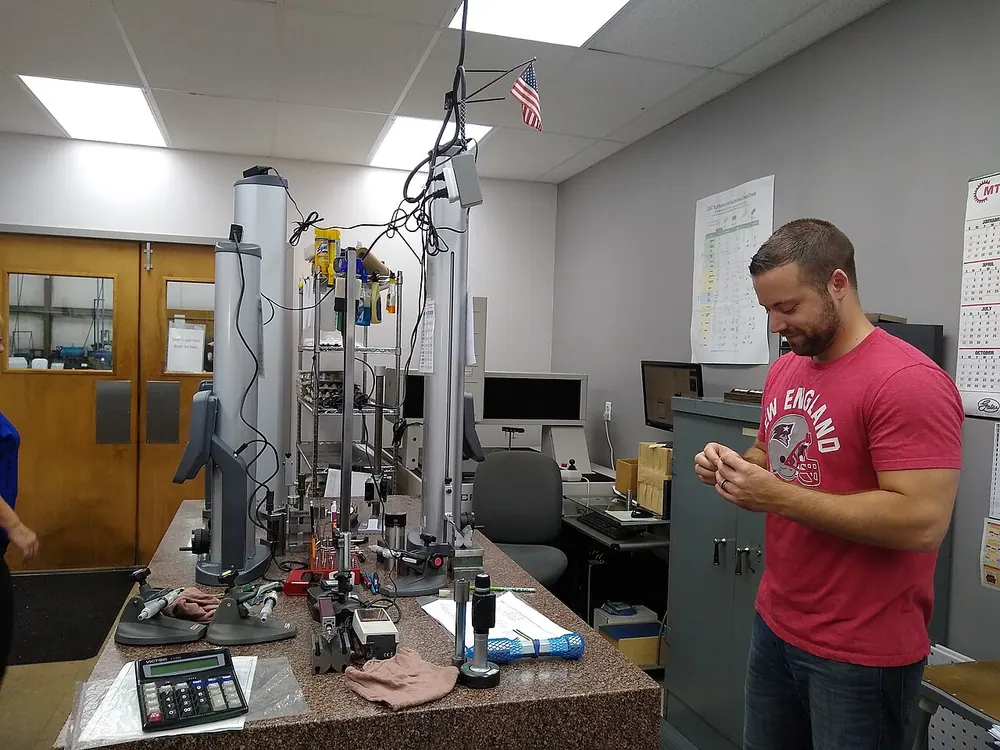
Acceptance records only mean something if the gauges behind them are controlled. Annex IX section 2.2 of the EU MDR asks for the tests carried out before, during and after manufacture and the test equipment used, and it requires that the calibration of that equipment can be traced back. You do not need the shop’s whole calibration system. You need each result tied to a gauge identification number and the confidence that the number resolves to a calibration record in date at the time of measurement.
Ask the shop how a result on a report is linked to a gauge, and how long the calibration records are kept. A shop that cannot answer the first question is giving you numbers that nobody can defend.
Traceability to the unit or lot
The QMSR keeps device-level traceability inside the same frame. Section 820.10(b)(2) says the manufacturer must document traceability procedures in accordance with part 821 where it applies, and section 820.35(c) says the UDI must be recorded for each medical device or batch of medical devices. Those are your obligations. The shop’s part is a chain you can follow in one direction: finished lot number to traveler, traveler to material heat, traveler to each special process, traveler to inspection record and inspection record to gauge.
Where the chain breaks, the record fails. Typical breaks are a bar cut into several lots without carrying the heat number onto each traveler, a sub-tier certificate that names a batch of parts and not your lot, and a rework step that is not recorded on the traveler.
Retention and access
In the EU, Article 10(8) requires the manufacturer to keep the technical documentation for at least 10 years after the last device was placed on the market, and at least 15 years for implantable devices. Supplier records your documentation relies on need to be reachable for as long. Write that period into the agreement, name where the records live and say what happens to them if the shop closes. A practical safeguard is to receive the full packet with each lot and store it yourself, so the record does not depend on the shop surviving. See the quality agreement guide for the surrounding clauses.
Common gaps in a supplier packet
- A certificate of conformance without drawing revision or lot number.
- Inspection results shown as pass or fail with no measured values.
- Gauge identification missing, or present but unlinked to calibration.
- A special process certificate that covers a vendor’s work in general and not your lot.
- Rework done and never entered on the traveler.
- Records edited after the fact with no trace of who changed what.
- A split lot sharing one traveler.
None of these requires a quality engineer to spot. They require someone to read the packet against the checklist before the lot is released.
What it costs
The packet is part of what you are buying. A shop that prepares it routinely adds little. A shop that builds it by hand per lot charges for the time. Ask where the documentation sits in the quote, and see how to price the documentation line to judge whether the figure is reasonable.
Next step
Take your last lot from a machining supplier and compare its packet to the nine items above. Note what was missing and which of those items the agreement requires. Then send the checklist with the drawing when you request a quote.
We match buyers with machining suppliers and the buyer pays us nothing. We are not a machine shop and we do not qualify a supplier for you, because qualification and the audit belong to your own quality system. We reply within 24 business hours.
Sources
- FDA, Quality System Regulation Amendments, final rule (89 FR 7496), comment 31 on DMR, DHF and DHR and ISO 13485 clause 7.5.1
- 21 CFR 820.184, Device history record, as in force before 2 February 2026 (eCFR)
- 21 CFR Part 820, current text, sections 820.10 and 820.35 (eCFR)
- Regulation (EU) 2017/745, Article 10(8) and Annex IX section 2.2 (EUR-Lex)
- ISO 13485:2016, Medical devices, Quality management systems, clauses 4.2.3, 4.2.5 and 7.5.1
Standards and regulations change. Check the current text at the source before you rely on it in a submission.
Frequently asked questions
Is the device history record the supplier's responsibility?
No. The record belongs to the device company, which has to show that each lot was made to its requirements. A machining supplier owns the records of its own operations and supplies the inputs. Your quality agreement should say which records, in what form and with which delivery.
Does the device history record still exist under the QMSR?
FDA removed the term and its separate requirement. Its commentary says that many of the elements are now in the medical device or batch record under ISO 13485 clause 7.5.1. Many companies keep the DHR name for the same purpose, and the content a supplier supplies stays the same.
Which records should a machine shop keep for implant lots?
The regulations give no fixed list for a component shop. Define the list in the quality agreement: traveler, material and special process certificates, inspection results with gauge identification, nonconformance records and shipment records. Set a retention period at least as long as yours, which is 15 years for implantable devices in the EU.
Do I need full inspection data or a certificate of conformance?
It depends on risk. For a low-risk part, a certificate of conformance and a sampled report may be enough. For an implant component, ask for the measured values by characteristic with gauge identification, because a statement that parts conform cannot be audited.
Need a quote for this part?
Send the drawing. We match you with up to 3 medical machining suppliers and reply within 24 business hours.
Get matched with a medical machining supplier